CRIM in the Analysis Classroom
Esperanza Rodríguez García (Universidad Complutense de Madrid)
Introduction
This report describes the results of an exploratory experiment to test the potential of CRIM Intervals as a pedagogical resource. CRIM Intervals is a music analysis computer tool developed by the CRIM Project, and its primary aim is to support the analysis of Renaissance imitation masses. Additionally, it holds an excellent pedagogical potential. It was tested in four sessions of a master course at the Universidad Complutense de Madrid on 17 music students having little or no knowledge of Renaissance music and, generally, little digital literacy. Despite the study’s limited time and scope, the results were encouraging: using CRIM Intervals in non-specialist classrooms is doable, efficient, and engaging.
Although the main aim of this report is to describe the implementation of a learning experience with CRIM Intervals in the classroom, it does not discuss general pedagogical issues concerning computer analysis. This will require further experimentation that broadens the results, making them more representative. Nonetheless, it will engage in some methodological discussion of the learning experience.
The CRIM Project
The research project Citations: The Renaissance Imitation Mass (CRIM) focuses on the corpus of imitation Masses, a particular Renaissance music genre built on pre-composed musical material and defined by the specific reusing of that material. The project aims at tracing, explaining and representing patterns of similarity between the pre-composed models and their derivative masses. Starting in 2014, it is directed by Richard Freedman (Haverford College), in partnership with David Fiala (Programme Ricercar, CESR-Université François Rabelais, Tours), with advisors and collaborators from the US, Canada and Europe.
The CRIM Project web application hosts a growing collection of music scores encoded in MEI (and also available as PDF), a database of analytic observations, and (via the Editor’s Forum pages) a wealth of support material such as vocabularies and sets of instructions of various kinds. CRIM is collaborative at heart, and this shows on various levels. On the one hand, the team is widely international and comprises scholars at various career stages. On the other, it strategically integrates musicologists and information scientists. The blend fosters constant and direct dialogue and results in proactive dynamics that enable immediate attention to any difficulty and the implementation of solutions (tailoring them should the researcher so require). As various observers have noted, this synergy has proved to be a crucial element for the general success of digital humanities undertakings. It is doubtless essential to CRIM’s accomplishments. [For Renaissance music, the pioneering collaborations between researchers at McGill University and Marianopolis College are paramount (McKay, Cumming, and Fujinaga 2018). The discussion on the collaboration imperative in digital musicology projects see, for example, (Inskip and Wiering 2015), and (Rodríguez-García and McKay 2021).]
In the project’s initial stages, the search for pattern similarity was conducted manually and expressed in annotations made available at the repository. Annotations are retrievable under the ‘Analysis’ section of the repository in the form of ‘Observations’ https://crimproject.org/observations/ and ‘Relationships’ https://crimproject.org/relationships/.
However, since then, the CRIM team has developed a powerful software for musical analysis called CRIM Intervals (for the CRIM Intervals code and documentation, see the GitHub Repository). Although CRIM initially devised the software for automating the analysis tasks concerning contrapuntal similarity, its range of capabilities continues to enlarge. It can now analyse other features, both within individual pieces and collections of them. Also, it is ready to be applied in other repertories beyond the polyphonic imitation Mass. According to the project’s description:
Based on Python and Pandas, and music21 […], CRIM Intervals is a pattern finding engine for musical scores, with an emphasis on the kinds of melodic and harmonic patterns found in Renaissance polyphony. It has been developed as a primary data analysis tool for Citations: The Renaissance Imitation Mass […], but can be applied and adapted to a wide range of styles (https://github.com/HCDigitalScholarship/intervals#about-crim-intervals).
Results are reported in Pandas dataframes (and thus exportable in a variety of standard formats for further analysis), and also via several visualizations methods.
Providing training for the musicologists in the team has been the project’s primary task since the development of CRIM Intervals. Instead of instructing mere operators of a Web Application, CRIM endorses a more profound knowledge of the software that could result in advanced users with a more refined understanding. Because of this deliberate determination, the software runs directly on Jupyter Notebooks. They are a satisfactory midway option that combine code and commentary. Therefore, some basic knowledge of Python is necessary for operating CRIM Intervals. Depending on the user’s digital proficiency, this might constitute a challenge. That was the case for most of the musicologists involved in the project, who had little experience in computer analysis and coding.
To help overcome these difficulties, CRIM devised an ambitious learning program that includes detailed instructions within the Jupyter Notebooks, a wealth of supporting materials (both written and video content), weekly online support sessions and one-to-one sessions on demand. Moreover, the project organised a workshop [Digital Musicology: What Can We Teach Machines about Renaissance Music?, held in Tours in June 2022] and a conference with further training sessions [Digital Counterpoints: Exploring similarity in Renaissance Music, held in Haverford in October 2022]. Whether this collective and individual effort matches the refinement of the potential results remains an open question, and the efficacy of the decision to not implement a user-friendly (if less sophisticated) interface will need further assessment (as we shall see, this issue will reappear later in this article).
The strategy deployed to train CRIM musicologists has created a set of systematic pedagogical practices which could be fully replicated and expanded in other learning contexts and for broader teaching purposes. Two members of CRIM, Marina Toffetti and Gabriele Taschetti (Università degli Studi di Padova) have started trying the pedagogical potential of CRIM Intervals and, from the academic year 2019-20, have introduced the analysis tool in undergraduate analysis modules with the support of the core team (they organized various seminars in November 2019, December 2021, and December 2022). Their interest lies in creating tailored Jupyter Notebooks to be accessible to musical and non-musical students alike, adding to them complementary elements such as visualizations and music renditions. The preliminary results, presented at the projects’ meetings in Tours and Haverford, are certainly promising.
I joined CRIM in 2021 when the project was in full motion. I am a cultural musicologist interested in the music of the Early Modern period, and analysis features prominently in my research as a supporting tool (rather than being an object of study itself). I was excited about the possibilities offered by the new analytical tool. However, having had previous experience with computer analysis (in particular with McKay 2018) I was equally aware of the difficulty of learning new digital methods. I was also reluctant to dive into the study of the Renaissance imitation Mass on an epistemological level. At the time, my analysis work focused on Iberian motets from around 1500. This corpus is stylistically distinct from the mainstream imitation mass mainly because of the genre’s conventions but also because of regional variations of the contrapuntal language. Concerning the latter, the difference is especially noticeable in the treatment of imitation, applied less systematically than in the Franco-Flemish repertoire (embodied in the works of Josquin Desprez).
There were reasonable doubts about whether CRIM Intervals (designed for mainstream imitation techniques) would perform appropriately on such a repertory. However, the unflinching encouragement from the core team and the prospect of joining an active and stimulating research network dispelled any remaining hesitation. Moreover, the team’s assistance throughout the process enabled my testing of the software on Iberian early motets. Incidentally, this mindset towards creating cohesive team dynamics and supporting the group members is key to CRIM’s success. It fits general recommendations for advancing digital humanities pointing that “efforts should be made into supporting the development of their digital skills and in providing reliable user-centered software” (Inskip and Wiering 2015: 460).
The results of the analysis of the motets with CRIM Intervals were mixed, as reported in the paper I read at the conference in Haverford fittingly entitled: ‘Describing Imitation in Iberian Motets c.1500 with CRIM Intervals: Is It Possible?’. The test showed the need to widen the criteria to detect similarity in types of imitation patterns that behave differently from the mainstream imitation model. Improving CRIM_Intervals’ capabilities to reflect on these aspects is technically plausible (and some adjustments were actually implemented during the paper’s preparation). The software’s continuous evolution ensures that updates taking into account alternative imitation features will be available should the need arise.
Despite the many challenges derived from using a tool not designed explicitly for a particular repertory, the experience was highly positive. The need to refine the searches and results helped expand the tool’s capabilities. In the process, we learned a great deal about the functioning of CRIM Intervals and the different musical languages of Renaissance music.
Teaching CRIM Intervals – Planning
Equipped with a more sophisticated knowledge of CRIM Intervals and inspired by the pedagogical experience developed by CRIM colleagues at the Università degli Studi di Padova, I was prepared to try out the software’s potential for teaching analysis and Renaissance theory at the earliest opportunity. The moment came unexpectedly, shortly after the CRIM meeting in Tours. As a result of last-minute arrangements, my university offered to co-teaching a module on musical analysis at master’s level.
The Music MA Programme at the Universidad Complutense de Madrid (UCM)
For context, the one-year Music MA programme at the Universidad Complutense de Madrid (called Máster en Música Española e Hispanoamericana) comprises a balanced selection of taught modules of methodological and historical nature. Among the former, one module is devoted to the ‘practice and methodology’ of musical analysis (Análisis musical. La práctica y metodología). It is worth 6 ECTSs (European Credit Transfer and Accumulation System), which results in 15 sessions of 2.5 hours each (a total of 37.5 contact hours). The Music Department offers it during the first semester of the academic year (September to January). The module’s setup is quite flexible, and both the syllabus and the teaching methodologies vary according to the interests and specialization of the scholars who teach the module each year.
I shared the teaching with a department colleague (José L. Besada) who specializes in the analysis of post-tonal music and music cognition. When planning for the course and considering our separate areas of interest, we boldly decided to capitalize on our complementary strengths and focus on the music at the outer edges of the Common Practice Era. We considered that this could be an ideal occasion for students to widen the scope of their knowledge: rather than a shortcoming, we deemed our divergent chronological focuses and methodologies a rare chance to engage with repertories and research approaches generally absent or less represented in the undergraduate degree curriculum (a trait common to music colleges and universities in Spain).
My course segment comprised five sessions. I devoted one of them to the basics of Renaissance music theory, one to computer analysis in general and the remaining three to CRIM Intervals. CRIM’s director, Richard Freedman, conducted the last session online.
Students
The number of students enrolled in the master’s degree at the UCM varies every year but generally revolves around 20. The 2022-23 cohort consisted of 18, of which one dropped early on in the course. The spread of the students’ backgrounds followed the pattern observed in the module in the last five years. The selection is pretty comprehensive, although the students’ career paths and specializations can be classified roughly into two groups: those coming from music colleges (called ‘Conservatorios’ in Spain, which concentrate on performance and composition) and those who graduated from universities (generally having taken a ‘Grado en Historia y Ciencias de la Música’ that is mainly oriented to musicology). Whichever their background, they fulfilled the entry requirements regarding the minimum level of musical literacy that should allow them to read scores, recognize music elements aurally to an advanced level, and discuss historical music subjects in depth. Some had taken general modules on Renaissance music, leaning towards history rather than theory. However, their knowledge of the topic was superficial, and their level of engagement with the music was low. As for analysis, all of them could master the traditional analysis methods for dealing with the music of the Common Practice Era, and only a few were acquainted with alternative repertories and their corresponding analysis methods.
Finally, the more significant divergence in attitudes and knowledge level occurred in the students’ digital competency range: two had full command of coding (although they had not worked with Python before, they transferred their coding skills to this language without difficulty). On the other side of the spectrum, one student expressed plain rejection of anything technological or digital, and another two admitted disinterest in technology, tinted with some sense of inability based on previous experiences. The remainder were curious and excited about introducing computational analysis in the module.
Objectives and Contents
This pedagogical experience was designed with two purposes: to enhance the students’ learning process and to expand the range of my teaching skills while also raising the visibility of Renaissance music and computer analysis among students.
The specific objectives designed for students were
- to foster their digital competences
- to introduce them to the basics of computer-assisted music analysis
- to improve their knowledge of Renaissance music.
The main objective connected to my own practice was to test the tool’s potential as a pedagogical resource and investigate its possible integration into the undergraduate curriculum.
The contents, narrowly linked to the objectives, embraced knowledge and skills. Regarding knowledge, students were expected to get a basic understanding of Renaissance counterpoint (especially imitation), cadences, the imitation mass, a more comprehensive view of computer analysis, and an enhanced notion of collaborative research projects such as CRIM. Among the skills to attain in the module were a basic understanding of Python language and the capacity to work independently with CRIM Intervals for analyzing Renaissance music.
Methodology
While planning the course’s methodological framework, a few issues that have a bearing on the pedagogical pertinence of the action within the curriculum emerged. Two of them are worth mentioning here: first, the need to change how we teach historical music subjects in higher education (including objectives, contents and methodologies) and adapt them to the changing needs of current students; and second, the realization that the process of integrating digital methods in higher education is still an ongoing process of irregular spread and is currently wanting for a solid and concerted effort to develop an appropriate methodology.
Studies considering the current focus of the curriculum of historical music courses (and historical subjects in general) indicate the convenience of overhauling them by interrogating what are the necessities of the students of the 21st century as regards “historical knowledge” and “historical skills” (Lowe 2015: 66). Lowe suggests that, in order to reach a satisfactory equilibrium, these two elements must be balanced out (primarily by raising the skills ratio).
The syllabus of the UCM’s Music MA course largely satisfies this condition: while aiming at academic specialization (providing advanced musicological content and historical research skills), it also potentiates the acquisition of professional skills (such as music writing, critical editing, music management and the like) through hands-on training either within the department’s research projects or at external organizations (both institutional and business-oriented). In that respect, introducing a computer analysis tool such as CRIM Intervals in the master’s analysis module contributes to equipping students with additional digital and coding skills they will be surely applying in their future careers (even if they do not relate to Renaissance music or even music in general). Besides, the handling of Renaissance music in the analysis process is expected to have an impact on the appreciation and understanding of early music topics, which students tend to regard as a cluster of unfamiliar techniques, sounds and contexts from a distant past (Hatter 2020).
The second aspect that requires consideration is the convenience of devising a common methodological framework that could inform and support teaching with digital tools. A look at the literature about integrating the digital in the classroom speaks of an atomization of exploratory initiatives carried out as personal (or collective) ventures, reported as a myriad of unconnected efforts primarily focused on the particular. Nonetheless, there is also an interest in producing more wide-ranging reflections sharing methodological guidance of universal validity, even if tentatively devised.
Among these, two stimulating discussions on music methodologies based on practice (Cordell 2016: 464-65 and Duguid 2021: 528-29) have inspired my teaching with CRIM Intervals. They propose a set of specific methodological principles that apply to teaching digital methods: Cordell’s recommendations include starting small, integrating digital humanities into the curriculum, scaffolding the acquisition of new knowledge and skills, and thinking locally. Duguid proposes to consider three principles, “audience-focused content and delivery, progressive incorporation of digital methods, and technology-adjacent skills development.”
Incidentally, a crucial aspect related to adapting the content to specific audiences resurfaces in several discussions about the pedagogy of digital methodologies: the received view portraying students as “digital natives” does not necessarily imply they are critical users of digital tools. Cordell and, more recently, Duguid insist on clarifying that although students have grown up surrounded by an increasingly digital world, it does not automatically follow that computer activities come naturally to them. Locke refines this idea by remarking that even though students create digital content daily, they do so within the technical limitations imposed by the commercial platforms they use. Hence, they do not develop deep technical knowledge (Locke 2015: 4).
Teaching CRIM Intervals – Practice
The four sessions of the MA analysis module devoted to CRIM Intervals took place between 16 November and 13 December 2022, with a total dedication of nine hours (9h). As mentioned above, 17 students of various study paths with differing levels of musicianship and digital skills took the classes.
The sessions (with methodological observations)
SESSION 1 (1.5h) was an introduction to survey the students’ rapport with Renaissance music, to refresh their existing knowledge, and, if necessary, to fill in lacunae. Contrary to my initial expectations, many students had had previous contact with Renaissance music, primarily through choir singing. A few had followed a course in their undergraduate studies (at least two years earlier). For a quick and informative general view of the Renaissance contrapuntal language, we watched the CRIM’s introductory video, “Renaissance Counterpoint in 6 Measures”, narrated by Richard Freedman. The first six bars of Pierre Sandrin’s Doulce memoire display the main features of the Renaissance music style, and the video provides a wonderfully clear and comprehensive synthesis of them.
Students found the video very useful. However, it contains so much information in its 10-minute length that they had to pause it various times to digest the content. Also, they resorted to accessing the score on their computers to see the details at their own pace, and so improving their comprehension. In addition to the content’s density, there were other contributing factors to the slow processing of the video, namely the students’ limited knowledge of Renaissance counterpoint and their English language proficiency (all were Spanish native speakers, most of them with a medium-level of listening skills). For future course iterations, I should ask the students to download the score from CRIM. It also be good to have a transcript or subtitles for the video.
Next, we examined the theoretical labels describing the various textures of Renaissance polyphony, using the denominations adopted by CRIM in its “Thesaurus of Musical Types”. Specifically, we focused on those describing imitation (“Presentation Types”). They are Fugas (Fs), Periodic entries (PEns), Imitative duos (IDs), and non-Imitative duos (NIMs). This exercise was in preparation for operating CRIM Intervals “Notebook 5- Presentation Types”, which analyses these imitation techniques (except for NIMs). Students greatly appreciated the Thesaurus’ conciseness and precision in the definitions and the graphic support material. They were especially keen on an additional CRIM resource (“Fugas, PENs, IDs, and NIMs made simple”), a handy graphic following coeval teaching principles for explaining the Presentation Types with an ingenious schematic representation of the music voices’ movement (see Fig. 1). As we shall see, students recalled it naturally when asked to describe presentation types. The historical-informed pedagogy that inspires CRIM’s teaching approach has proved very effective in teaching Renaissance music (Schubert 2008; Cumming 2013).
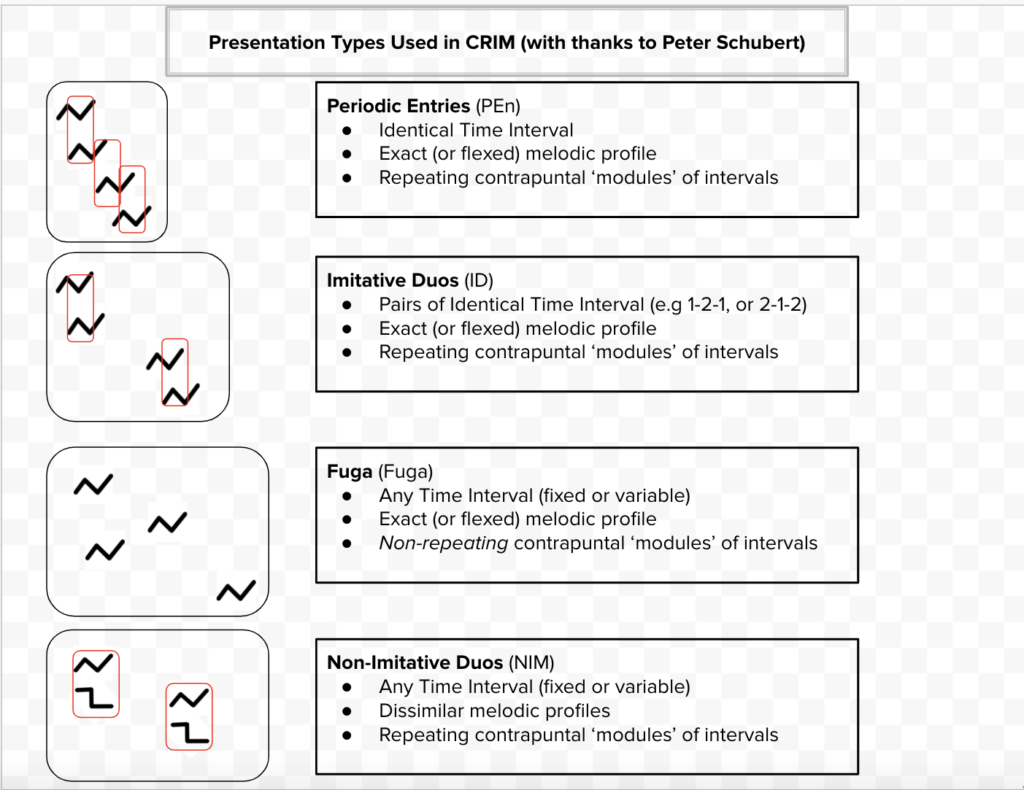
Figure 1: Fugas, PENs, IDs, and NIMs made simple
To close the session, we listened to Josquin’s motet Ave Maria before the students, in groups of four people, started analyzing it manually using CRIM’s labels. This activity helped clarify and consolidate concepts. As homework, the students were asked to finish the manual analysis.
SESSION 2 (2.5h) took place one week later. We started the class by revising the students’ analysis of Josquin’s Ave Maria. Their answers and comments showed a good grasp of the technical vocabulary, although it was necessary to clarify the differences between the pairs IDs / PEns and IDs / NIMs.
We created new work groups of four people (with one of five), each group owning a JupyterHub account (kindly provided by CRIM). Assigning an account per group was a practical measure to economize resources and potentiate collaborative learning. The system’s capacity to run four Notebooks simultaneously in one account was a concern, but finally, it proved feasible. Students logged in in groups to have access to the Notebooks. As a safety policy applicable to their entire work with CRIM Intervals, each person was requested to create a copy of the Notebook they would use (by duplicating the original) and work from it. The personal Notebooks allowed all the students to have their customized materials, preventing the accidental destruction of the Notebook (and the need to reboot the whole account to recover it).
To start the training, we ran the “Notebook-Python Basics” (see Fig. 2). CRIM has specifically created it to help acquire basic command of the fundamentals of Python. It is a practical introduction to the language designed to help users reach autonomy and get accustomed to CRIM’s Notebooks work environment.
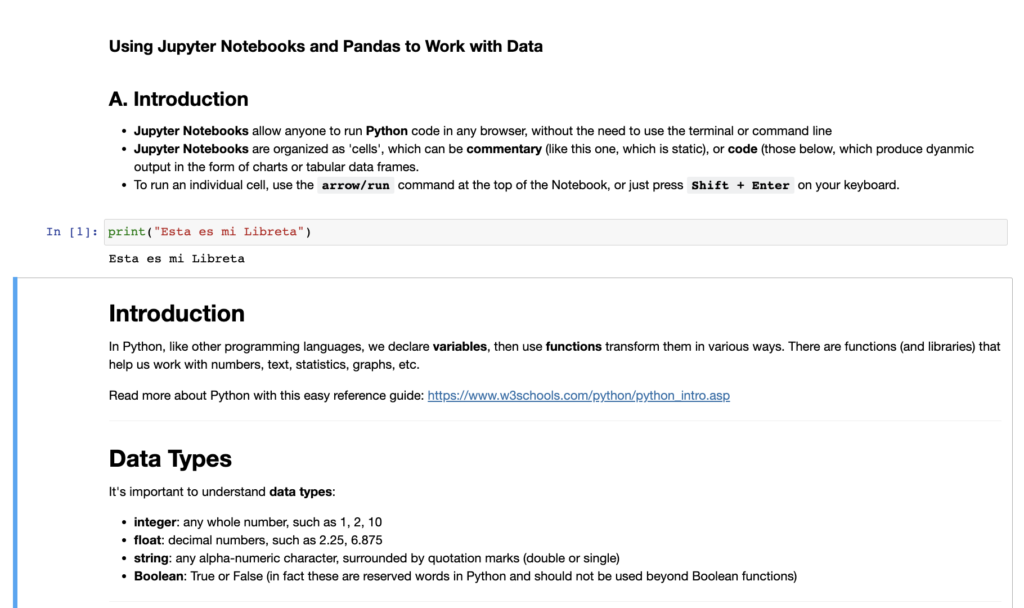
Figure 2: Screenshot of “Notebook-Python basics”
The first attempt went surprisingly well. I was apprehensive about my limited command of Python. However, the intuitiveness of the language and the simplicity of the Notebook (along with some spontaneous help from the students with advanced coding knowledge) contributed to the success.
This proves the tremendous pedagogical potential of CRIM Intervals, which is operable for modest purposes with little practice. Group work dynamics engendered peer learning, which was vital for building up knowledge. In line with Duguid’s recommendations, in future courses, I will devote more time to honing this skill which will lay a solid basis for the students’ progress. Even if I plan to have improved my command of Python by then, I am considering engaging a Python expert to give a lengthier introduction to Python and help navigate the introductory Notebook more swiftly.
Overall, using the training Notebook was good enough to give most of the class a sufficient technical basis to operate “Notebook 5-Presentation Types”. We ran it together on Josquin’s Ave Maria and spent the remainder of the session interpreting the results (See Fig. 3). Students learnt how to technically define imitation by describing the soggetti (represented as n-grams portraying the melodic intervals in column 8), their location (column 5), the order of the voices involved in the imitation (column 10), the melodic and time distance between entries (column 6 and column 9) and the resulting Presentation Type (column 11).

Figure 3: Results of “Notebook 5-Presentation Types”
To finalize the class, I asked the students to produce a short essay comparing the results of the manual and automated analysis, to be assessed as part of the course assignments. In case they could not replicate the experiment at home, we produced an HTML version of the results as backup material for students.
The next meeting, SESSION 3 (2.5h), occurred a week later. It started with a short revision of the course assignment, which helped solve doubts and prepare them to complete it independently.
The session’s core was divided into two sections: the first focused on attaining a more refined understanding of the Presentation Types Notebook, and the second on doing exploratory work on cadences with “Notebook 4-Cadences”.
Concerning the Presentation Types, the session aimed at teaching students how to manipulate the Notebook’s settings for searches to get more personalized results. I chose early Renaissance Iberian music (which, as mentioned, creates particular additional challenges to CRIM Intervals). This choice allowed students to observe the regional differences in style.
The parameters that a user can modify in the search include: limiting the search to entries, deciding the subject’s length and its range of flexing (at the start or within it), and whether to blend unisons, as per the instructions included in the Notebook (see Fig. 4).
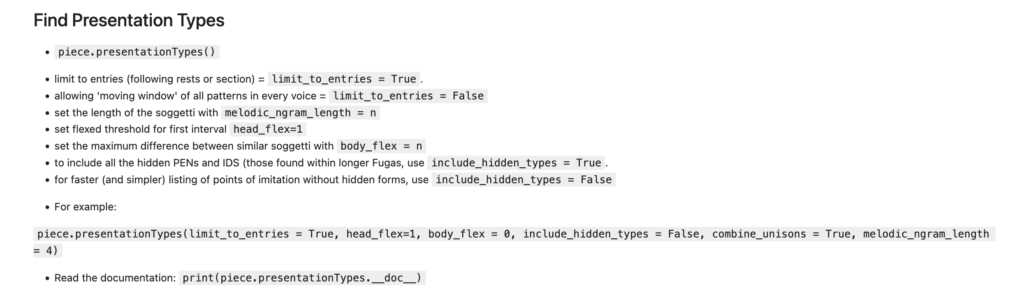
Figure 4: Notebook 5-Presentation Types, instructions
CRIM has established that the optimal setting for searches would be: limit_to_entries = True, body_flex = 0, head_flex = 1, include_hidden_types = False, combine_unisons = False, melodic_ngram_length =4.
We spent some time clarifying these concepts before running the search with the optimal values on the motet O gloriosa domina by Pedro Fernández de Castilleja. By doing this, students realized that the soggetti in the Iberian repertory tend to be shorter than the standard length (4 notes), and lowering the number to 3 could help to detect more entries, such as the one of the cantus in bar 8, in green, which CRIM Intervals otherwise missed in its default setting (as seen in Fig. 5).
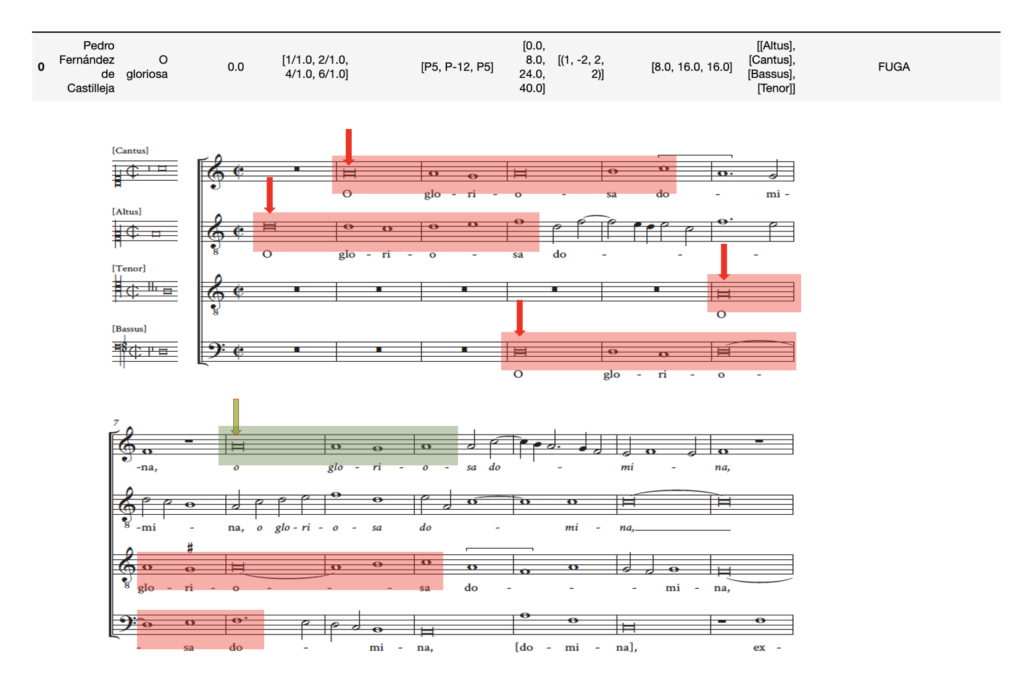
Figure 5: Pedro Fernández de Castilleja’s O gloriosa domina, bars 1-13
Another difference between the two repertories that students discovered through CRIM Intervals is that entries in Iberian music are not always preceded by a rest. CRIM Intervals applies this crucial feature, characteristic of Franco-Flemish music, by default. It clearly works for Franco-Flemish music but provides unsatisfactory results in Iberian music. An interesting case in point that CRIM Intervals was unable to find happens in bars 21-31 of O gloriosa domina (Fig. 6). The second soggetto creating a Fuga (in yellow) goes undetected because it comes immediately after the previous soggetto (in purple).
This example was perfect for testing the effects of turning the ‘limit to entry’ variable to FALSE with the students and discussing how to manage the massive return of results it provided. New searching capabilities addressing this issue have been implemented since, enhancing the possibilities to identify and record stylistic differences between repertories.
Overall, assessing the results was a highly enriching activity and contributed to refining the students’ understanding of Presentation Types and the analytical tool in general. They positively valued the tool’s quick return of results, which afforded them the immediate comparison of results when changing the variables in the setting for searches. They also became aware of the need to balance the range of the changes with the amount of data they could process.
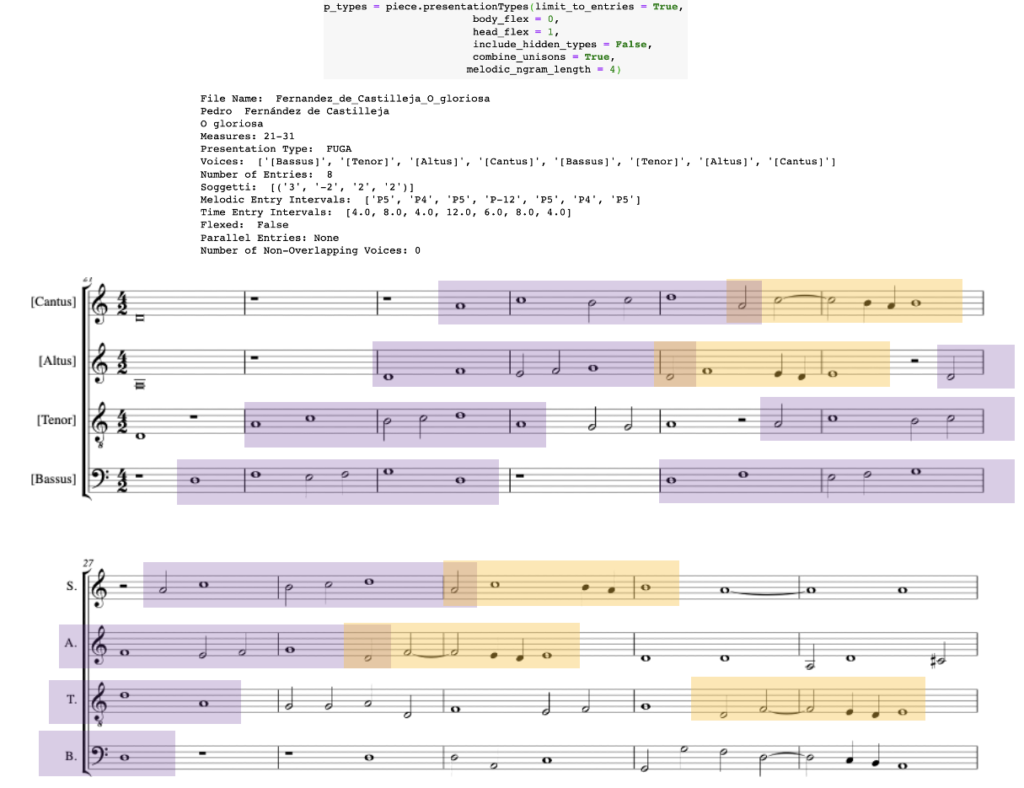
Figure 6: Pedro Fernández de Castilleja’s O gloriosa domina, bars 21-31
As mentioned, I planned a short activity with “Notebook 4-Cadences” to introduce students to the vocabulary to describe cadences. It was intended as a pedagogical experiment, so I could sample whether students could work in reverse order, that is, to use the analysis tool to “teach” them theoretical concepts. We ran the Notebook on a piece and then asked the students to interpret the results with the “Thesaurus of Musical Types” at hand. Although there was little time, students discovered the technical names for the functions of the voices in a cadence: cantizans, altizans, tenorizans, and bassizans. As we shall see, the activity had a reasonable success.
The last class, SESSION 4, was conducted online by Richard Freedman (who generously accepted my invitation). It took place two weeks after session 3, which negatively affected the students’ engagement. It had two parts, a general overview of the project and the software and a practical introduction to its core: the imitation mass. We chose to analyze the Missa Sancta et immaculata virginitas by Francisco Guerrero (based on Cristobal de Morales’ motet of the same name). To give students a more comprehensive view of CRIM Intervals capacities, Freedman presented “Notebook 2-Melodic nGram Maps”, which introduces sophisticated visualization tools.
The first part of the class ran smoothly, as the students had a general knowledge of the contents and could follow with relative ease. It took the shape of a master class with students’ questions. The second part became more problematic. Despite Freedman’s excellent intervention, the session was marred by faulty planning, which overlooked simple but essential principles. First, the content was too ambitious, especially concerning theoretical knowledge (the imitation Mass). Second, the classroom setup did not help either. The lecturer talking from a screen at the front of the classroom naturally made the students arrange themselves in a theatre style, which hindered teamwork. The sound was also coming from the computer at the front, which forced students to shift to interact with the lecturer or to rely on me to intermediate. All this affected the communication flow. I had to run back and forth when students had technical difficulties. Third, the language was not a major factor but contributed to the delay (as I stopped recurrently to double-check that students were following the talk).
With all this happening in the background, the students learnt how to produce heat maps with CRIM Intervals and interpret them by identifying the melodic motives (represented by n-grams translated into colours) in the motet and their reworking in the mass (Fig. 7). They were excited by the visualizations, but I think they only gained a superficial knowledge of imitation from them.
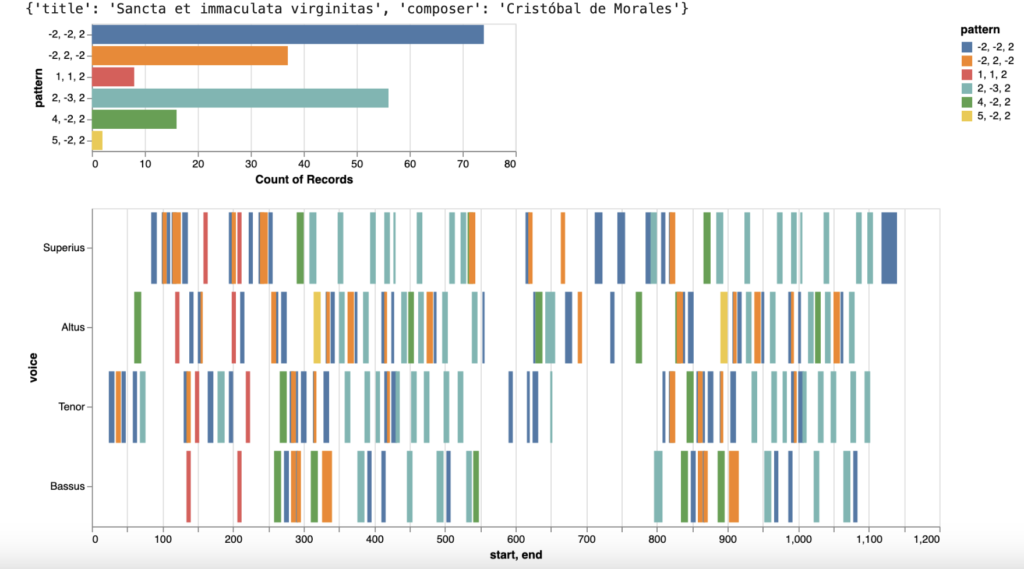
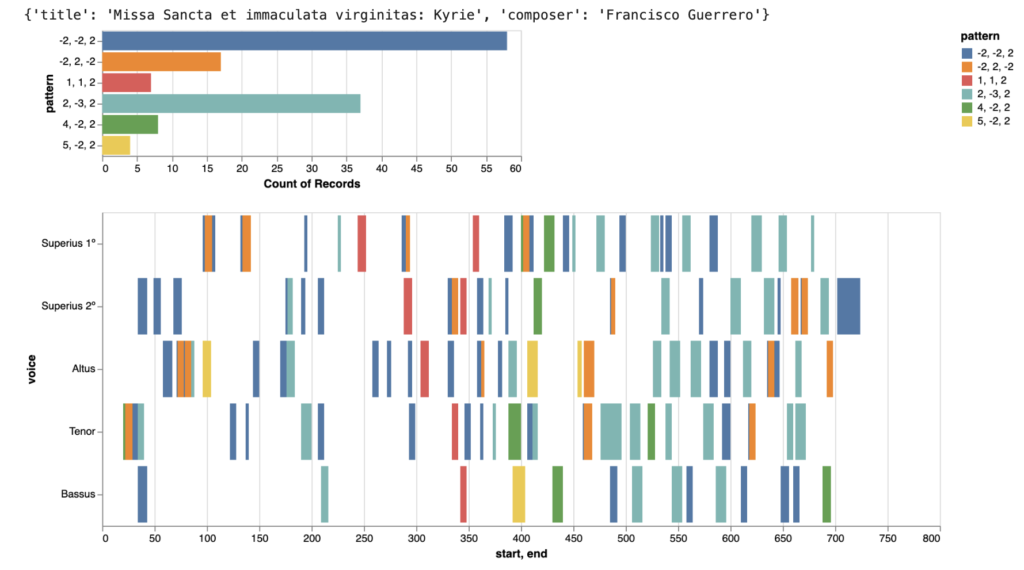
Figure 7: Heatmaps of the melodic nGrams of Cristobal de Morales Sancta et immaculata virginitas (above) and Francisco Guerrero’s imitation mass on the motet (below).
For future courses, the technical issues should be easily resolved with better planning of the communication technology, the space arrangement, and the enrollment of helpers. Adapting the content to the teaching reality will require a process of reflection based on this teaching experience and the methodological principles that have proved valuable in similar ventures.
The students’ experience
In the previous section, I described and assessed the learning process through evidence collected in the classroom from direct observation and informal discussions with students. In what follows, I am adding the students’ anonymous reflections obtained through completing a written survey presented without prior notice at the end of the process. The survey concentrated on three different areas aiming at evaluating the different aspects that the teaching embraced: CRIM Intervals, computer analysis/digital skills, and Renaissance music theory. There were agree/disagree questions using a 1 to 5 scale and also extended commentaries.
A set of preliminary questions was intended to determine the students’ background and engagement with the activities. They were asked about their previous knowledge of digital tools, the number of sessions they attended and the amount of time they devoted to the tasks outside the classroom. These factors directly impacted the responses: the higher the previous knowledge and engagement, the more positive their responses were. Attendance was not as crucial an aspect, and there was a dissonance in the responses of two students who attended all the sessions but needed to be more engaged to try to use the tool independently.
There was one person that was completely disengaged from the start. The student attended three sessions but was uninterested/unable to pursue study independently and did not seek individual support. In the survey, only agree/disagree questions were completed, and the single comment they wrote sounded despairing: “I have understood nothing. It is too complex”. Interestingly enough, the student scored highly on section 3 of the survey. The complete withdrawal of students should be prevented in future courses by closer monitoring, which will be possible through the assistance of helpers. Once detected, individual support will be offered bringing students back to track.
Section 1 of the survey probed on the students’ perceptions as users of CRIM Intervals. They were asked about the tool’s utility, applicability, and ease of use. There was near unanimity that it is an efficient tool that, potentially, they could integrate into their music research (they were particularly optimistic about the technical capacities of the software). However, concerning usability, the opinions were divided. Many suggested that a more intuitive interface could enhance their user experience (hence confirming Locke’s observation that students feel more comfortable with technology when they do not have to understand the technical foundations of the software). On a pedagogical basis, though, such an interface will impede the acquisition of foundational and transferable digital skills crucial to fostering creativity and innovation that universities should be providing for students (see Daniel Russo-Batterham’s essay in this collection: Russo-Batterham 2023).
Some also remarked on the difficulty of learning Python in advance.
Section 2 focused on students’ self-assessment of the skills and knowledge they thought they had gained. 85% of them considered that they had improved their knowledge of Renaissance music and could understand its grammar better (scoring 3 or higher). A significant proportion (90%) of students deemed the tool excellent for stimulating hands-on learning (scoring 4 and 5). The last issue assessed, understanding computer analysis better and wanting to use it in the future, scored slightly lower, with 75% of students agreeing.
Finally, Section 3 was designed as a test to provide a preliminary idea of the tool’s efficiency as a pedagogical resource for teaching Renaissance theory. It is important to remember that students knew they were learning both the software and Renaissance theory, but there was no specific focus on the latter. The test consisted of two short questions, asking them to define as precisely as possible (in the fashion of CRIM Thesaurus) two technical terms, “imitative duos” and “cantizans”. The results were outstanding: 90% of students could identify the two concepts, and around 70% described them precisely. As expected, “Imitative duos” were better grasped than “cantizans”, which is commensurate with the amount of time devoted to Presentation Types versus cadences. However, the fact that they could describe the latter appropriately came as a surprise. The usefulness of CRIM’s pedagogical approach, based on teaching methods developed alongside theoretical concepts, showed in the students’ deep comprehension of complex and remote historical concepts. Using the graphics shown in Fig. 1 in their responses only reinforces the conclusion that historically-informed pedagogical tools are highly effective.
Final reflections
CRIM Intervals exhibits considerable pedagogical potential and boasts an excellent set of supporting materials ready to be applied to the classroom and easily tailored to many different objectives and situations. Also, it delivers significant returns regarding knowledge and skills, as shown by the survey’s results.
Two aspects require attention to improve my future teaching with CRIM Intervals. First, students need help to overcome problems in the first stages (generally arising from a possible lack of digital expertise and sometimes combined with apprehension towards technology). This support can materialize in activities developing technology-adjacent skills (Python) and closely monitoring students encountering difficulties (by enrolling helpers). This is vital to grant their engagement (and the teaching success) from the beginning, as it can be challenging to revert later on. As shown in the survey, students who have achieved a basic command of the tool and feel more independent value the experience as engaging and valuable. Group work also contributes to the students’ involvement, but participants in each group must be selected carefully to achieve a balanced range of abilities that assures peer-learning.
Second, although the learning process objectives suited the situation, their execution through contents was too ambitious. Building enough knowledge to study the imitation mass in four sessions was unrealistic, going against essential methodological advice to start small. This principle should feature prominently in the planning of future courses.
Overall, teaching CRIM Intervals has been an exciting (if challenging) venture that has opened a new path I intend to continue exploring in my practice. Future teaching will help refine these preliminary conclusions evolving into a more comprehensive understanding of the pedagogical implications of employing computer analysis tools in education.
BIBLIOGRAPHY
Cordell, Ryan. 2016. “How not to Teach Digital Humanities.” In Debates in the Digital Humanities, edited by Matthew K. Gold and Lauren F. Klein, 459–74. Minneapolis: University of Minnesota.
Cumming, Julie. 2013. “Renaissance Improvisation and Musicology.” Music Theory Online 19. Read Online
Duguid, Timothy. 2021. “Behind the Times? Digital Research Methods and the Music Classroom.” Notes 77: 519-38.
Freedman, Richard. 2022. “Renaissance Counterpoint in Six Measures.” CRIM Project, “Renaissance Counterpoint in 6 Measures.” Watch Video
Freedman, Richard, Alex Morgan, Freddie Gould, Daniel Russo-Batterham, Trang Dang. 2020-. “An interval-analysis based music similarity engine.” https://github.com/HCDigitalScholarship/intervals
Hatter, Jane. 2020. “Early Music Matters: Revitalising the Survey through a Contextual Approach.” College Music Symposium 60: 1-13.
Inskip, Charles and Frans Wiering. 2015. “In Their Own Words: Using Text Analysis to Identify Musicologists’ Attitudes Towards Technology.” In Proceedings of the 16th International Society for Music Information Retrieval Conference, edited by Meinard Müller and Frans Wiering, 455–61. Málaga: International Society for Music Information Retrieval. Read Online
Locke, Brandon T. 2017. “Digital Humanities Pedagogy as Essential Liberal Education: A Framework for Curriculum Development.” Digital Humanities Quarterly 11. Read Online
Lowe, Melanie. 2015. “Rethinking the Undergraduate Music History Sequence in the Information Age.” Journal of Music History Pedagogy 5: 65-71.
McKay, Cory, Julie Cumming, and Ichiro Fujinaga. 2018. “jSymbolic 2.2: Extracting Features from Symbolic Music for Use in Musicological and MIR Research”, In Proceedings of the 19th International Society for Music Information Retrieval Conference, edited by Emilia Gómez, Xiao Hu 0001, Eric Humphrey, Emmanouil Benetos, 348-54. Paris: International Society for Music Information Retrieval. Read Online
Rodríguez-García, Esperanza, and Cory McKay. 2021. “Composer Attribution of Renaissance Motets: A Case Study Using Statistical Features and Machine Learning”. In The Anatomy of Iberian Polyphony around 1500, edited by Esperanza Rodríguez-García, and Joao Pedro d’Alvarenga, 401-38. Kassel: Reichenberger.
Russo-Batterham, Daniel. 2023. “Institutional Perspectives on Digital Collaboration: A View from Down Under.” CRIM Project Perspectives Essays and Experiments from Citations: The Renaissance Imitation Mass (https://crimproject.org/), edited by Richard Freedman. https://crimwp.richardfreedman.sites.haverford.edu/?page_id=1060
Schubert, Peter. 2008. Modal Counterpoint, Renaissance Style. 2nd ed. New York: Oxford University Press.